Conflict Minerals and Their Global Supply Chain Issues
Release time: 2025-11-07
What Are Conflict Minerals?
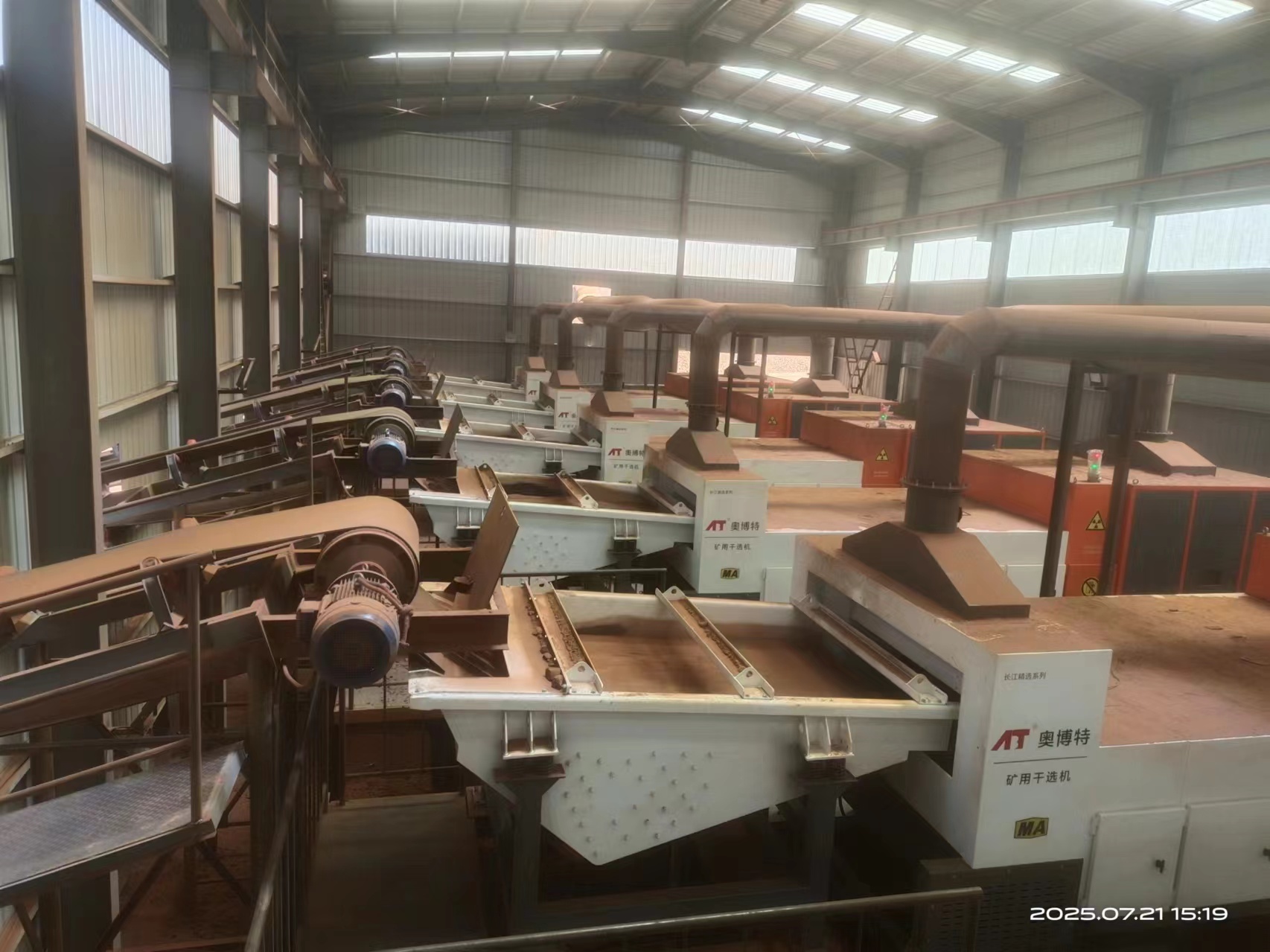
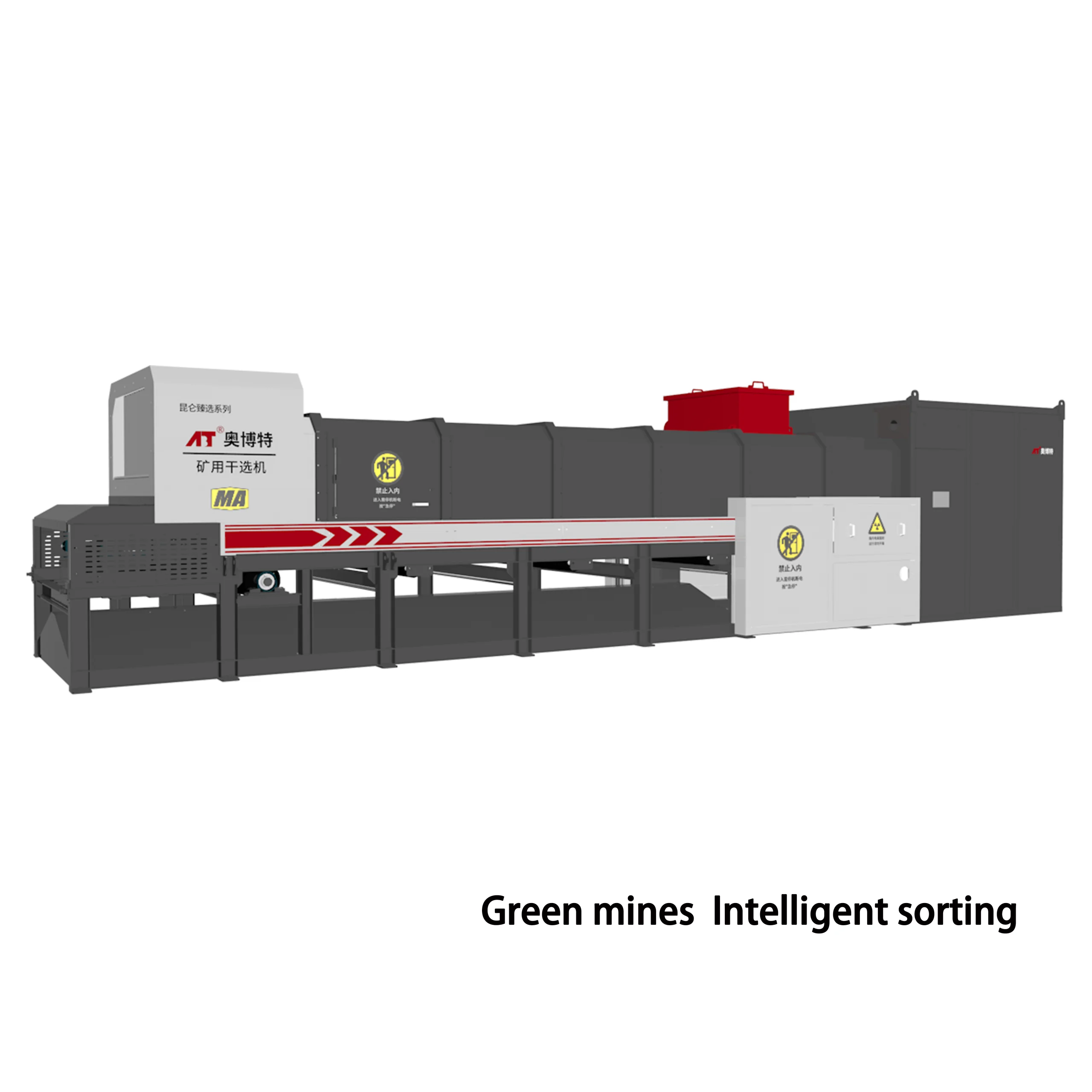
Conflict minerals specifically refer to minerals(Mineral Separator AI X-Ray Sorting Machine) mined in areas of armed conflict and high risk, which, through illicit trade, fund local armed forces (including insurgent groups, warlords, and corrupt armies), leading to human rights abuses and environmental damage. Simply put, the trade in these minerals is not controlled by legitimate governments or regular businesses, but has become “blood money” that fuels conflict and human rights violations.
Core Concepts and “3TG” Minerals
Conflict minerals generally refer to four main metal minerals(Metal Mineral Separator AI Mining Dry Sorting Machine) from the Democratic Republic of Congo and its surrounding Great Lakes region of Africa (including Rwanda, Uganda, Burundi, etc.), collectively known as “3TG”:
(1) Tantalum(Tantalum Ore AI X-Ray Sorting Machine) –– from coltan(Coltan AI Mining Dry Sorting Machine). It is an important material for manufacturing capacitors, and is widely used in electronic products, such as mobile phones, computers, and game consoles, etc.
(2) Tin(Tin Ore AI X-Ray Sorting Machine) – from cassiterite(Cassiterite AI Mining Dry Sorting Machine). It is mainly used in solder and electronic component packaging.
(3) Tungsten(Tungsten Ore AI X-Ray Sorting Machine) – from wolframite(Wolframite AI Mining Dry Sorting Machine). It is used in the manufacture of cemented carbide, cutting tools, and mobile phone vibration motors.
(4) Gold(Gold Ore AI X-Ray Sorting Machine) – from gold ore(Gold Ore AI Mining Dry Sorting Machine). With extremely high economic value, it is used in electronic circuit boards, connectors, and jewelry.
These minerals are key raw materials for high-tech and luxury goods industries, and the huge market demand makes their illicit trade highly profitable.
Major Issues and Impacts
The trade in conflict minerals has serious humanitarian and environmental consequences:
(1) Financing Violence and Conflict: Revenue from mineral sales provides funds for armed groups to purchase weapons and prolong civil wars, keeping the region in a state of prolonged instability.
(2) Severe Human Rights Violations:
① Forced Labor: Miners work under gunfire.
② Child Labor: Large numbers of children are forced to work in dangerous mines.
③ Sexual Violence: Armed groups frequently commit sexual violence against women and girls in mining areas.
④ Poor Working Conditions: Mine collapses, frequent accidents, and a lack of basic safety and hygiene.
(3) Environmental Degradation: Illegal mining activities lead to deforestation, soil and water pollution, and loss of biodiversity. (4) Corruption and Governance Failure: Illegal trade breeds corruption, weakening the authority of legitimate governments and the tax base.
International Response: A Case Study of Section 1502 of the Dodd-Frank Act
To address this issue, the international community has taken legislative action, most notably Section 1502 of the U.S. Dodd-Frank Wall Street Reform and Consumer Protection Act.
(1) Core Requirements: Manufacturers listed on U.S. stock exchanges must conduct due diligence on whether their products use “3TG” minerals from the Democratic Republic of Congo and neighboring countries. They must submit an annual report to the U.S. Securities and Exchange Commission detailing the due diligence measures taken regarding the source and supply chain of these minerals. If a product is deemed “conflict-free,” a third-party audit is required.
(2) Objective: By mandating companies to trace and disclose their supply chains, the goal is to cut off funds flowing to armed groups and encourage companies to source from legitimate and responsible sources.
Besides the U.S., the European Union has also passed a similar Conflict Minerals Regulation, which came into effect in 2021, requiring EU importers to conduct mandatory supply chain due diligence on titanium, tin, tungsten, and gold.
China’s Stance and Actions
China is a crucial link in the global manufacturing and mineral supply chain, and its stance and actions are closely watched.
(1) Official Stance: The Chinese government supports responsible mineral procurement in principle and encourages enterprises to comply with international norms. The Chinese government believes that the fundamental solution to conflict mineral issues lies in helping African countries achieve peace and development and improve their own governance capabilities, rather than simply imposing trade restrictions.
(2) Industry Initiatives: The China Chamber of Commerce of Metals, Minerals & Chemicals Importers & Exporters has published the “Guidelines for Responsible Mineral Supply Chain Due Diligence Management in China,” providing Chinese enterprises with a framework and tools for conducting supply chain due diligence. Its concepts align with international standards (such as the OECD guidelines). Some leading Chinese technology companies, such as Huawei and ZTE, have incorporated conflict mineral policies into their corporate social responsibility systems and require their suppliers to conduct traceability.
(3) Challenges: Many small and medium-sized enterprises in China are located upstream in the mineral supply chain, and their awareness and capabilities in responsible management need to be improved. Due to the complexity of the global supply chain, achieving 100% traceability is very difficult. Internationally, China’s involvement is sometimes directly linked to the issue of conflict-free minerals, making this topic highly geopolitically sensitive.
ConclusionIn conclusion, “conflict minerals” is a complex issue connecting global consumption, regional conflicts, human rights, and supply chain responsibility. It reveals the potential “blood and tears” hidden beneath the glamorous surface of modern technological products. Through international legislation, corporate due diligence, and increased consumer awareness, the world is striving to build a more transparent and responsible mineral supply chain. As consumers, we can also contribute to this change by supporting brands that publicly commit to using “conflict-free minerals.”