Pertambangan Berkelanjutan 2026: Bagaimana Pemilahan Mineral Non-Logam Kering Merevolusi Kepatuhan ESG
Waktu rilis: 2026-02-04
Mari kita jujur sejenak: menjalankan operasi pertambangan pada tahun 2026 sangat berbeda dengan sepuluh tahun yang lalu.
Jika Anda mengelola lokasi penambangan fluorit, kuarsa, atau feldspar, Anda tahu bahwa tekanan tidak hanya datang dari harga pasar lagi. Tekanan itu datang dari regulator, komunitas lokal, dan investor yang terobsesi dengan satu akronim: ESG (Lingkungan, Sosial, dan Tata Kelola).
Izin penggunaan air semakin sulit diperoleh. Peraturan bendungan limbah tambang menjadi mimpi buruk untuk dipahami. Cara lama dalam melakukan sesuatu—"menggali, mencuci, menjual"—dengan cepat menjadi beban.
Inilah alasan mengapa industri ini menyaksikan perubahan besar ke arah tersebut. pemilahan mineral non-logam dengan menggunakan teknologi kering. Ini bukan lagi sekadar peningkatan yang "bagus untuk dimiliki"; bagi banyak tambang di daerah kering atau yurisdiksi yang ketat, ini menjadi satu-satunya cara untuk tetap beroperasi.
Inilah mengapa penyortiran kering adalah pahlawan tanpa tanda jasa dalam revolusi pertambangan hijau 2026.
Akhir dari Pengaturan Standar “Pemrosesan Basah”
Selama beberapa dekade, jika Anda ingin memisahkan bijih berkualitas tinggi dari batuan limbah, Anda menggunakan air. Dalam jumlah banyak.
Metode pemisahan media berat (HMS) atau jigging tradisional memang efektif, tetapi biayanya sangat mahal. Anda tidak hanya membayar untuk airnya; Anda juga membayar untuk mengolahnya, menyimpannya, dan akhirnya, membersihkan kekacauan yang ditinggalkannya di bendungan tailing.
Dalam konteks tujuan ESG modern, ini adalah tanda bahaya. Investor memperhatikan "jejak air" Anda sama saksama dengan neraca keuangan Anda.
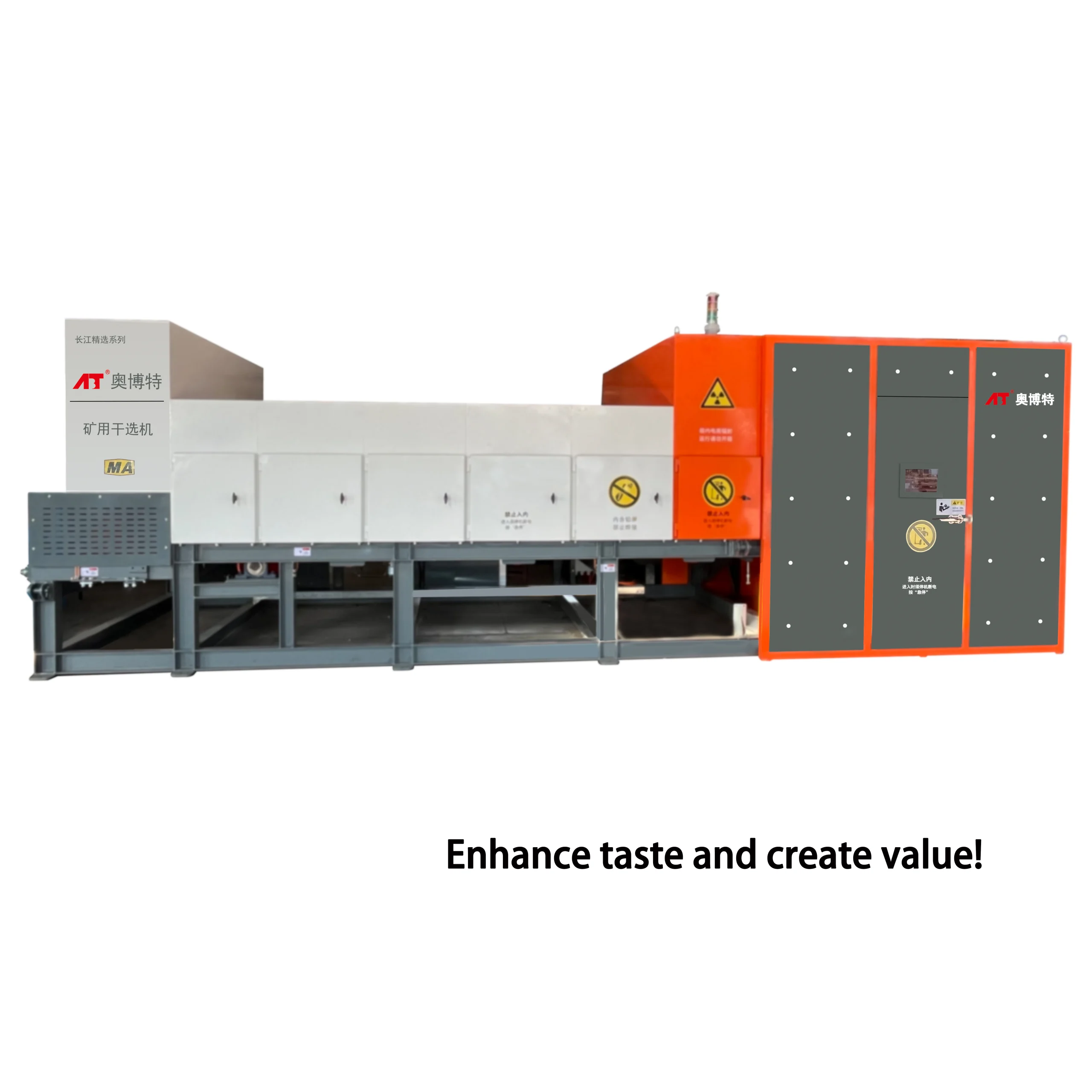
Di sinilah letak kemajuannya pemilahan mineral non-logam Peralatan canggih berperan penting. Dengan memanfaatkan Transmisi Sinar-X (XRT) dan sensor AI, kini kita dapat mencapai pemisahan berbasis densitas tanpa setetes air pun. Kita berbicara tentang pra-konsentrasi bijih tepat pada tahap penghancuran, membuang batuan limbah lebih awal, dan menghilangkan air sepenuhnya dari persamaan.
Bagaimana Teknologi Tersebut Sebenarnya Bekerja
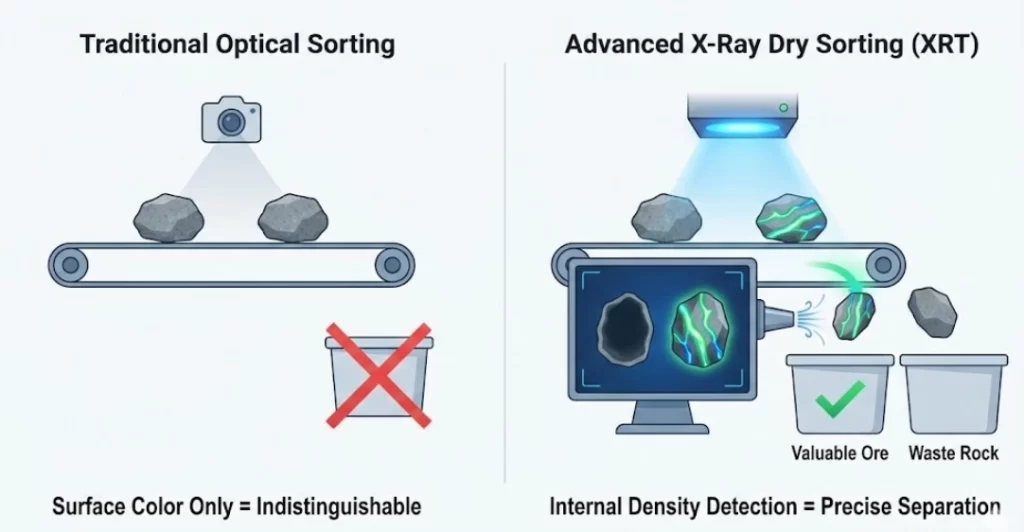
Jika Anda masih menganggap "penyortiran" sebagai alat penyortir warna optik lama yang hanya melihat warna permukaan, Anda perlu memperbarui pengetahuan Anda. Generasi peralatan baru—seperti Seri Huanghe Zhixuan—mendalami hal ini jauh lebih dalam.
Modern pemilahan mineral non-logam Sistem ini mengandalkan "Transmisi Sinar-X Energi Ganda." Bayangkan seperti pemindai bagasi medis, tetapi untuk batuan. Sensor menembus bijih, menghitung kepadatan atom setiap batu di sabuk konveyor.
- Warna tidak penting: Sepotong batuan limbah berwarna abu-abu mungkin tampak identik dengan fluorit abu-abu di permukaannya.
- Kepadatan adalah kuncinya: sinar-X melihat di dalamIa mengetahui bahwa fluorit lebih padat.
- Aksinya: Pancaran udara berkecepatan tinggi meniup bijih berharga ke dalam satu wadah dan membiarkan limbah jatuh ke wadah lainnya.
Ini cepat, kering, dan sangat presisi.
Kartu Skor ESG: Mengapa Teknologi Ini Unggul?
Mari kita uraikan bagaimana beralih ke metode kering. pemilahan mineral non-logam Berdampak langsung pada laporan kepatuhan ESG Anda.
1. Lingkungan (Huruf “E”)
Ini yang paling penting. Dengan menerapkan penyortiran kering, Anda dapat mengurangi konsumsi air hingga 90% jika Anda menggunakannya untuk pra-konsentrasi (membuang limbah sebelum masuk ke pabrik pengolahan basah).
- Mengurangi Limbah Tailing: Karena Anda membuang batuan limbah dalam keadaan kering, Anda tidak mengubahnya menjadi lumpur basah. Limbah kering secara kimia stabil, lebih mudah ditumpuk, dan tidak menimbulkan risiko kegagalan bendungan.
- Tagihan Energi Lebih Rendah: Anda tidak sedang menghancurkan batu sampah. Mengapa menghabiskan listrik untuk menggiling batu yang tidak berharga? Dengan memilah sejak dini, Anda hanya menggiling bahan yang bagus.
2. Sosial (S)
Tambang seringkali berkonflik dengan masyarakat setempat terkait hak air. Jika tambang Anda menyedot air tanah setempat, masyarakat akan menentangnya. Dengan menggunakan metode kering, pemilahan mineral non-logam Dengan menggunakan peralatan tersebut, Anda menunjukkan kepada para pemangku kepentingan lokal bahwa Anda adalah tetangga yang bertanggung jawab. Anda tidak bersaing untuk mendapatkan pasokan air mereka. "Izin Sosial untuk Beroperasi" ini sangat berharga.
3. Tata Kelola (“G”)
Tata kelola berkaitan dengan manajemen risiko. Mengandalkan pemrosesan basah di daerah yang kekurangan air merupakan risiko operasional yang sangat besar. Jika air menjadi hambatan, produksi akan berhenti. Pemilahan kering mendiversifikasi lini pemrosesan Anda, membuat operasi Anda tangguh terhadap risiko iklim dan perubahan peraturan.
Penerapan di Dunia Nyata: Kuarsa dan Fluorite
Mari kita lihat angkanya. Dalam proyek-proyek terbaru yang melibatkan fluorit berkualitas rendah, kita telah melihat pemilahan kering mengambil tumpukan "limbah" (dengan kadar sekitar 15-20% CaF₂) dan memperkayanya menjadi lebih dari 40-50% pra-konsentrat.
Sebelumnya, material ini dianggap sebagai sampah. Sekarang, material ini menjadi bahan baku.
Bagi penambang kuarsa, tantangannya seringkali adalah menghilangkan pengotor berat seperti hematit atau barit. Pemilahan mineral non-logam Mesin-mesin ini dapat menghilangkan kotoran dengan kepadatan tinggi ini secara presisi, melindungi keputihan dan kemurnian produk akhir tanpa pemutihan kimia.
Intinya
Kita telah melewati titik di mana kepatuhan lingkungan hanya sekadar memenuhi persyaratan formal. Pada tahun 2026, efisiensi menjadi fokus utama. adalah keberlanjutan.
Jika Anda dapat mengurangi biaya operasional (lebih sedikit air, lebih sedikit energi, lebih sedikit penggilingan) sekaligus meningkatkan peringkat lingkungan Anda, itu adalah pilihan yang sangat mudah.
Pergeseran ke pengeringan pemilahan mineral non-logam Ini bukan hanya tentang menyelamatkan planet—ini tentang menyelamatkan margin keuntungan Anda. Seiring berjalannya dekade ini, tambang yang beradaptasi dengan pengolahan kering akan menjadi tambang yang tetap menguntungkan dan patuh terhadap peraturan.
Apakah Anda siap untuk melihat bagaimana cara kerja penyortiran kering sinar-X untuk mineral spesifik Anda?
[Tautan Internal: Jelajahi Seri Penyortiran Sinar-X Huanghe Zhixuan kami di sini.] Untuk melihat spesifikasi, atau hubungi kami untuk mengatur pengujian sampel untuk bijih Anda.